AI
How we will know when the AI is sentient
Foolproof tests you can run on your own with no technical experience.
No, the chatbot didn't cure that dog's cancer
It’s Easter Sunday. To celebrate, I took the Windrush line up to Hoxton, had festive Swedish meatballs at the Curious Yellow Kafe, then wandered through Shoreditch under that thin, deceptive spring sun London offered today. On the train back south, the miracle arrived in my idle-time phone scrolling. It happened somewhere between Whitechapel and where the internet cuts out when the train goes underground for a few stops. A tech bro cured his dog’s cancer with ChatGPT. It’s an Easter story, neatly packaged for the feed. Like, share, move on. Don’t miss your stop.
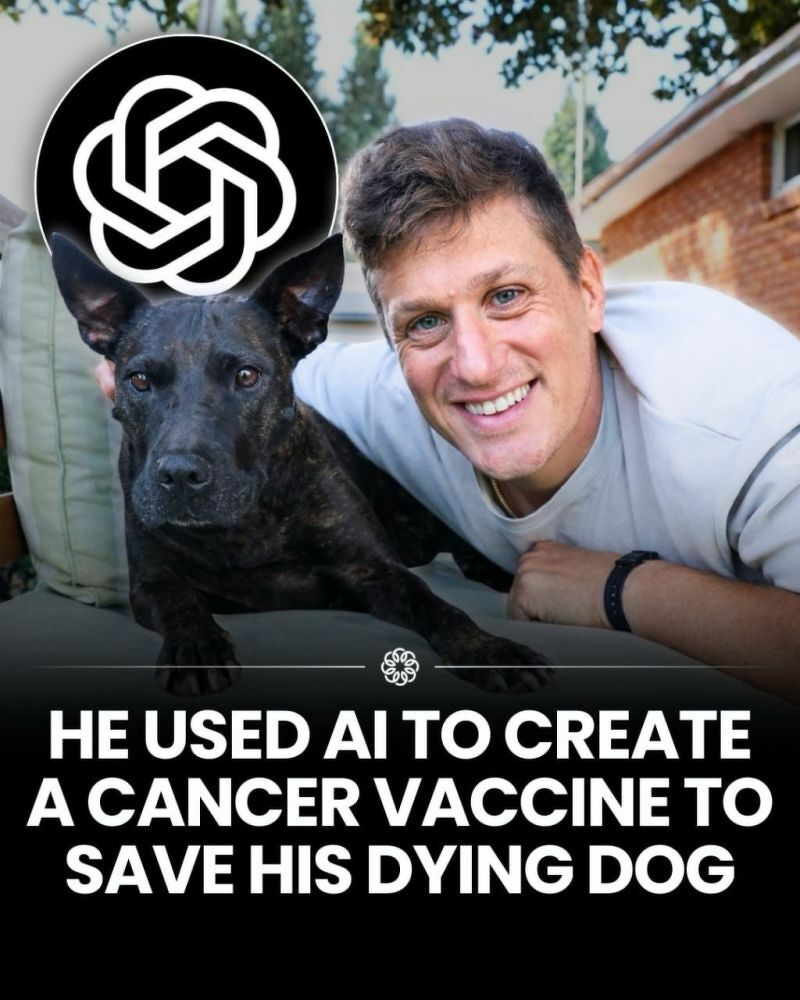
Read the story, why do that? There was a preview card. A toothy, smiling white man and his happy Staffy mix. The headline completes the Hallmark Channel story for our times: “He used AI to create a cancer vaccine to save his dying dog.” The ChatGPT logo floats just above the dog’s head, like a halo in a Renaissance painting of a saint. The story completes itself without the need of clicking through, or dealing with cookie consent forms, various pop-ups, a paywall, an e-newsletter subscription request, or whatever else nearly every commercial news site throws at you with javascript. We are living in miraculous times.
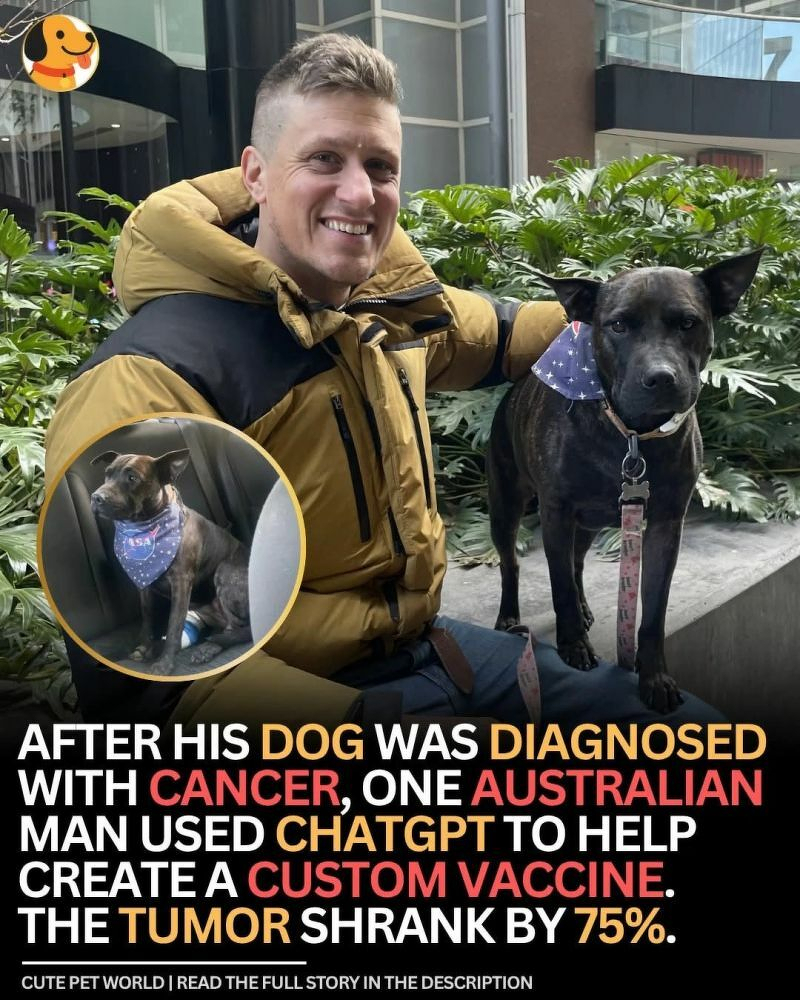
This is how most information moves now. Not through articles, but through surfaces. Preview cards, thumbnails, captions. Carefully assembled fragments designed to survive the scroll. The article itself exists, somewhere beneath, but it’s now almost incidental. By the time you might click, you’ve already decided what happened.
And this one lands because it’s engineered to. Cancer does the heavy lifting. The dog does the rest. It disarms you, makes scepticism feel inappropriate. It’s Easter after all.
But here’s the twist! It’s not just medicine, but AI! The bot we can all access to lazily respond to emails we’d like to ignore is being used by some wunderkind Down Under to cure cancer. We all have access to the thing that cures cancer. Or something like that. Or rather, no. It’s nothing like that.
Read these or don’t, can’t say you didn’t get the chance: To varying degrees, these are all hype headlines. The articles themselves vary in quality and detail. They all contain elements of the mythology that makes them sharable. The UNSW headline is especially egregious, it’s a university for fuck sake have some standards.
- He Solved His Dog’s Cancer: Three AI Models Helped — Forbes
- An Australian tech entrepreneur used AI to help create the first-ever bespoke cancer vaccine for a dog to treat his beloved pet Rosie — Fortune
- ChatGPT and AlphaFold Help Design Personalized Vaccine for Dog with Cancer — The Scientist
- Meet the man who designed a cancer vaccine for his dog — UNSW
What actually happened is slower, messier, and much less cinematic. It’s not even a particularly good Netflix series. Multiple rounds of conventional treatment didn’t work. The dog’s owner, with access, privilege and resources, pushed further into the system rather than bypassing it. DNA sequencing, researchers, lab work, a bespoke mRNA construct manufactured by specialists (not bots), layered with another form of immunotherapy. Ethics approvals. The AI is there throughout, but as a tool in the process, helping navigate research and make sense of data, not designing, manufacturing, or delivering treatment. The result isn’t a cure. It’s a partial response. It’s a treatment. Uneven, uncertain, and still unfolding.
That version of the story doesn’t travel. First off, it’s too complicated. Secondly, there’s no tidy hero element. No archetype pulled from the offspring of an Ayn Rand character template and a Robert F. Kennedy health policy. There’s a reason that Elizabeth Holmes conned people for so long. We’re conditioned to believe in unicorns. It slots neatly into something older. The founder myth: The outsider who breaks through where experts failed. The idea that you don’t need institutions, just ingenuity and the right tools. Being a drop out is even better. Not knowing the field is somehow an advantage, not a limitation. We want the dropout to win. It’s a comfortable tale because we’ve seen it before, in different forms, attached to different sectors, technologies, selling different shortcuts. The thing about unicorns, though, is that they aren’t real. It’s a team of special effects people.
“When an Australian tech entrepreneur with no background in biology or medicine said ChatGPT helped save his dog from cancer, the story couldn’t help but spread, wrote Robert Hart in The Verge. “It’s the kind of validation Big Tech has long craved: proof that AI will revolutionize medicine and take on one of its deadliest diseases. The reality, as usual, is more complicated.”
That Verge article gets it. “Not only was Rosie not cured of cancer, it’s not clear the mRNA vaccine was responsible for her improvement.” But it’s lobbing the truth bombs on the wrong side of a paywall. Misinformation runs free online while facts, context and details often need a monthly credit card payment. But even when an article isn’t paywalled, there’s increasing tendency to share before reading. A person could take that Verge article url and knock it into archive.ph and see the whole thing. But who knows that? How many people will do it? How many people will see the article at all compared to the more SEO tasty clickbait headlines that conform to our mythologies about tech founder genius? The funnel chart narrows pretty fast.
As is the custom on LinkedIn, it became fodder for everyone’s personal TED Talk script in the form of very long posts, often with single-sentence paragraphs. “This sounds like science fiction… but it actually happened,” wrote one person. “This is what can happen when a data scientist refuses to give up on his dog,” gushed another. Sorry folks, not this time.
“ChatGPT did not design or create Rosie’s treatment; human researchers did. At most, the chatbot served as a research assistant helping Conyngham parse medical literature — impressive, but a far cry from the breakthrough implied.”
— Robert Hart, The Verge
This isn’t about AI. It’s about belief. Right now The Discourse is fermenting. AI enthusiasts are banging the drum. Utopia is nigh! AI bashers are pointing out that the hype machine has its new poster critter. It’s not that these technologies aren’t useful in medical research, they demonstratively are: “These technological innovations not only improve vaccine design but also enhance pharmacokinetics and pharmacodynamics, offering promising avenues for personalized cancer immunotherapy.”
Humans don’t do lossless data compression. Information drops. It goes like this… Some event happens, a medical or technical breakthrough of some kind, let’s say. It’s complicated and contingent. Institutions frame it through teams of reviewers, cautiously, but optimistically. Companies try to leverage it for shareholder value. Media compresses it into something clickable to trigger as many monetisation scripts as possible before page exits hit. Social platforms format it into something that propels engagement and reduces departure. And then people take it, reshape it, and pass it on again for whatever reason. At each step, something is lost in a sort of social web non-random natural selection process. Nuance, complexity and uncertainty drop out of the pool early. Collaborative efforts are recessive, hero elements are dominant. What remains is the part that travels. To understand why it works this way, read fewer blog posts on social media engagement strategies and pick up some Joseph Campbell.
This isn’t Cambridge Analytica shenanigans. Those happen but they’re something else. This is default mode transmission: It comes with each transaction. The tools are technical, but behaviour is human. It doesn’t just spread information, it reshapes it into something that can move faster with each share that gets reshared. And in doing so, it often removes the parts needed to understand whether it’s true. It’s not necessarily false, but it’s often not accurate. And it’s optimised for people to be wrong.
Clouds without rain
These are notes. The triggering MacGuffin: I was recently asked to take part in an upcoming set of workshops. In general terms it’s around what happens when rapid AI infrastructure expansion collides with accelerating climate stress and other emerging security dynamics that make up the whole shit show of our times. I said sure. Of course I did, why not? It’s the opportunity to bring both my work and my doomscrolling together in some online panels.
It wasn’t a formal brief. Just an invitation to grapple with a question that is equal parts exploratory, open-ended, and deceptively simple. I’ve already started mulling it. On the surface it seemed like a narrow infrastructure question: water use, data centres, local protest. And on and on. But the more I mind-map the threads, the less contained it becomes. Water scarcity pulls in sovereignty disputes. Sovereignty disputes pulls in grievance. Grievance pulls in mobilisation, disinformation, extremism. I’m down rabbit holes. The deeper I’ve gone, the clearer it becomes: this isn’t about some servers. It’s not about the tech stack that constitutes what we call “AI.” It’s about compound pressure building inside already fragile systems. Everything is thirsty.
Bonfires instead of clouds
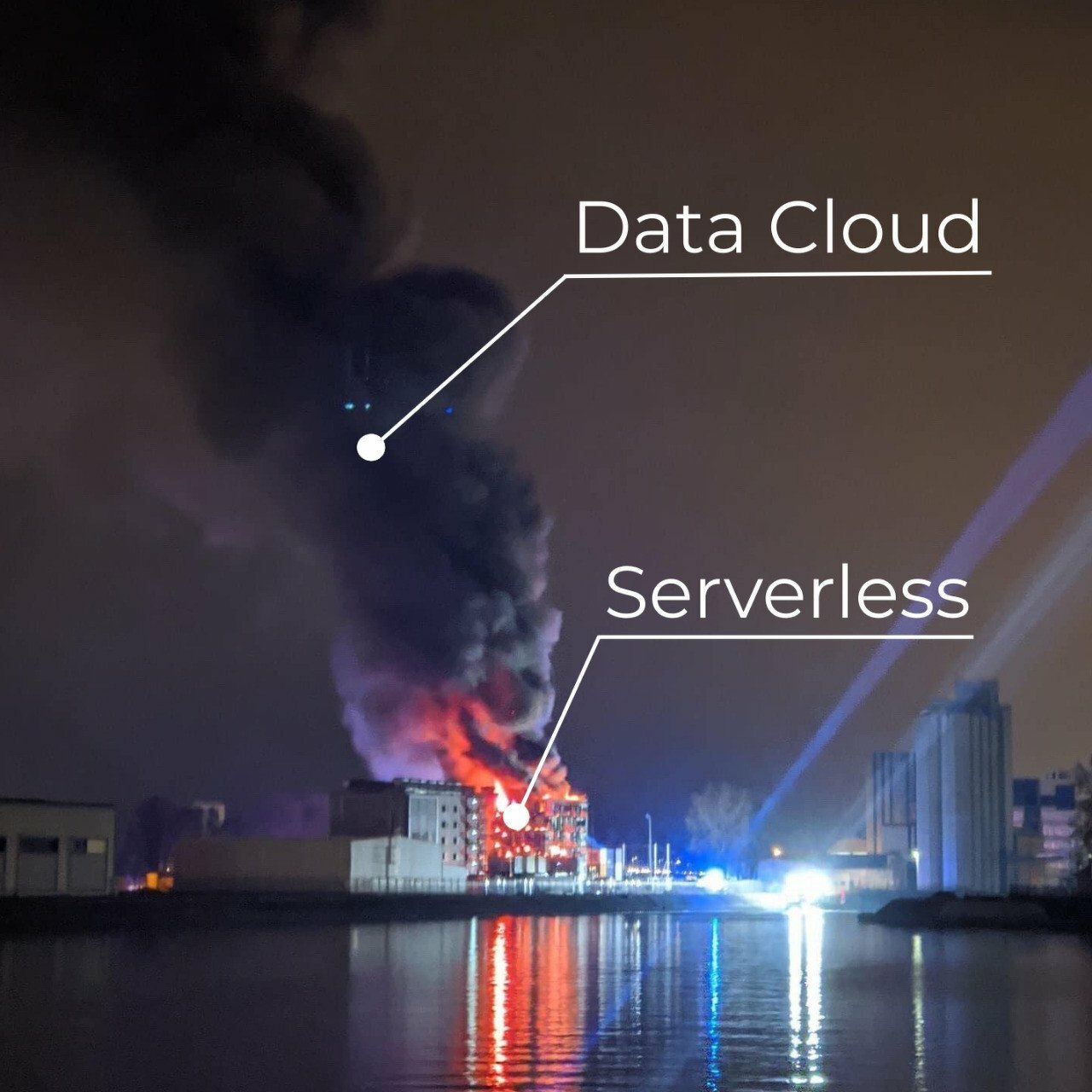
Everyone keeps talking about artificial intelligence like it floats in the cloud. The cloud has always been a horrible analogy for serverless computing. It invokes the idea of a happy replenishing loop — A hydrologic cycle — in which evaporation leads to condensation which leads to precipitation. That’s not how this works. It’s extractive, not replenishing. It runs on water. It runs on land. It runs on rare earth minerals pulled from the earth by environmentally devastating practices, or sometimes by children forced into the work to fund some side in a civil war. It runs on electricity sequestered from fragile grids in places already running at capacity. And as climate stress tightens its grip, AI infrastructure isn’t just expanding. It’s inserting itself directly into water-scarce, politically decaying regions — and pretending it’s neutral. It isn’t neutral. A natural cloud is neutral. This is combustible. It’s bonfire fuel.
Climate stress Is just the spark
Let’s kick off with some basics. Let’s start with drought, with heatwaves, with fire. Throw in energy volatility. Add generous portions of inflation and a cost of living crisis. Climate stress increases scarcity. Scarcity sharpens questions nobody wants to answer: Who gets water? Who gets power? Who absorbs the externalities? Who profits? You can already hear how that call-in show on the AM dial sounds, the one that you listen to on long road trips in areas where the radio doesn’t pick up anything else. When you’re not listening to podcasts.
Drop some hyperscaler’s data centre into that equation — a facility that consumes millions of gallons of water and enormous amounts of electricity — and you’ve just turned background tension into a visible symbol. Data centres are quiet, windowless, secretive. They hum. They don’t explain themselves. They don’t look like hospitals or schools. They look like extraction. That makes them narratively perfect.
Scarcity becomes the story
Once scarcity becomes visible, it becomes political. Water restrictions hit households and farmers. Energy prices spike. Meanwhile, a massive AI facility continues operating behind fences. It doesn’t matter whether the water accounting is technically defensible. In conditions of stress, perception outruns spreadsheets. That’s when mobilisation begins.
Environmental grievance. Anti-capitalist anger. Anti-technology backlash. Sovereignty disputes. Indigenous land rights conflicts. “AI colonisation.” “Water theft.” “Corporate takeover.” Some of these grievances are legitimate. Some are opportunistic. Some are engineered. Extremist ecosystems don’t care about the distinction. They care about narrative density. And nothing generates narrative density like visible scarcity plus opaque infrastructure. There are still things to smash even when the building has no windows.
The narrative battlefield
Here’s the part policymakers underestimate: data centres are easy to mythologise. They are technically complex but visually simple. That makes them ideal vessels for conspiracy and accelerationist framing. There was a whole movie about it.
Eco-fascists can weaponise water scarcity. Anti-technology movements can cast AI as civilisational decay. Far-right groups can fold local grievance into broader anti-globalist rhetoric. Disinformation actors can seed stories about contamination, secret surveillance, or “elite water pipelines.” The more technical the infrastructure, the easier it is to distort.
Mobilisation rarely begins with sabotage. It begins with a story. That story becomes outrage. Outrage fuels targeting.
Targeting prefaces sabotage
This is the stage most security planning ignores. When mobilisation escalates, it doesn’t jump straight to cutting cables. It starts with people. Local officials negotiating permits. Tribal leaders weighing partnerships. Journalists reporting on water allocations. Employees working inside the facility. Doxing. Harassment. Phishing disguised as activism. Insider recruitment framed as moral resistance. Coordinated smear campaigns. Manufactured leaks.
Eventually there is a memo. Facility hardening increases. Guards get hired. Perimeter fencing improves while legitimacy erodes. And once legitimacy erodes, insider risk grows. Cyber risk grows. Physical risk grows. Because the escalation pathway isn’t linear. It’s cumulative.
Compound risk is the replenishing loop
Remember the happy replenishing loop we already dismissed? Here’s where the cyclical system lives. It’s not happy. Climate stress increases scarcity. Scarcity increases grievance. Grievance gets captured and amplified. Narrative warfare increases hostility. Hostility increases targeting. Targeting increases cyber, insider, and physical risk. Then a disruption happens — a ransomware attack during a heatwave, a shutdown during drought restrictions, a clash at a protest — and the disruption itself becomes proof of the grievance narrative. The loop tightens.
Indian Country as a flashpoint
The Smithsonian’s National Museum of the American Indian has one of my favourite restaurants in Washington, DC. That’s not the only reason to visit. It also has the definitive exhibit detailing every treaty between the U.S. and Native American tribes, including all the broken ones. There are a lot of broken ones. The Trump regime is reviving that tradition. Columbia Basin Salmon Agreement canceled. Tribal Food Grants canceled. Climate and Green Energy Funding, cut. He once tried to revoke the reservation status of the Mashpee Wampanoag Tribe. Meanwhile, the federal government dangles shiny new treaty offers. The federal government now wants tribes to make deals to develop crops of data centres. That means leasing land or selling power. It means diverting water. The US Department of Energy apparently has a whole webinar about it. This is one particular rabbit hole I’ve stayed in for a while. In parts of the American West, the future of AI is being routed through Tribal lands. It’s already planned. The asking comes as an afterthought.
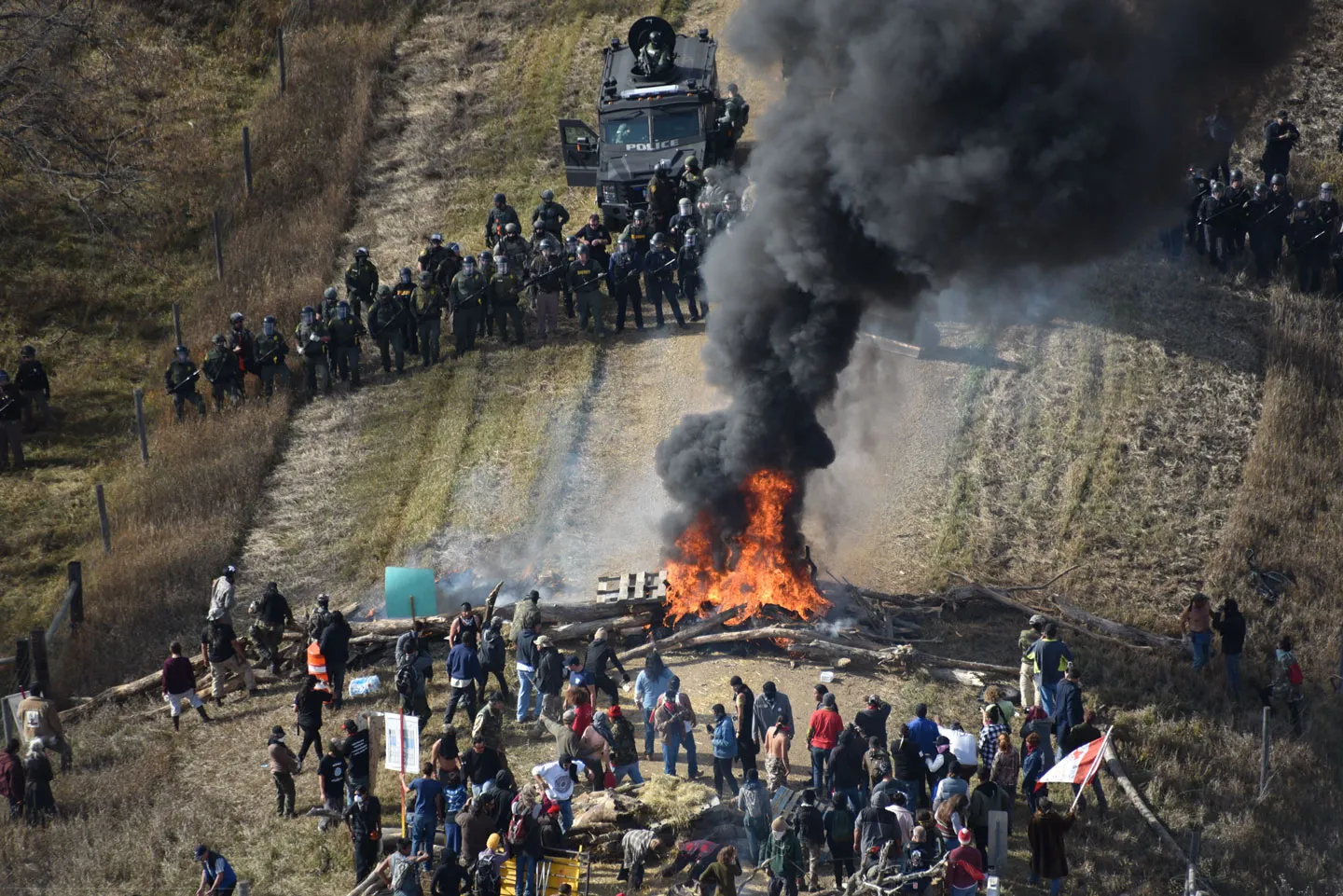
Federal agencies frame data centres as economic opportunity. Partnerships promise revenue, energy sales, infrastructure investment. But in water-stressed states with contested sovereignty histories, the stakes hit different. Land and water are not just commodities. They are treaty rights. They are cultural survival. That means disputes over AI infrastructure are never just about cooling systems. They are about sovereignty, extraction history, and trust. External actors, the extremist groups, disinformation networks, political opportunists — the various grievance entrepreneurs — will not ignore that. They will exploit it.
As I click through various news and papers on federal government promises and Tech hyperscaler plans already in progress I just think back to the Dakota Access pipeline protests at Standing Rock. This rabbit hole goes back even further. It goes back centuries. But I digress. Kind of.
The Illusion of technical neutrality
The industry still talks as if AI infrastructure is apolitical. It isn’t. It never is. It is being built in regions already strained by drought and inequality. It draws heavily on shared resources. It often operates with limited transparency. It depends on stable grids in an era of instability. And it is emerging at the same moment as mass distrust in institutions. The very software that requires these vast fields of data centres is built to fabricate. It’s built to lie. Another feedback loop in a volatile mix of them.
The blind spot
Most resilience planning focuses on the facility: redundancy, cyber controls, perimeter security, OT segmentation. But the escalation usually starts with legitimacy failure. If communities believe water is being diverted unfairly, if leaders feel pressured or silenced, if activists are harassed or co-opted, the social environment around the infrastructure becomes hostile. In hostile environments, security costs rise. Insider risk increases. Attack surfaces widen. Infrastructure does not exist outside politics. It sits inside grievance.
Here it is
My point — and I do have one — is that dropping AI infrastructure into the middle of fragile systems isn’t just an environmental issue. It’s a conflict multiplier. Climate volatility raises scarcity. Scarcity raises grievance. Grievance fuels narrative capture. Narrative capture increases targeting. Targeting destabilises both people and infrastructure.
And when instability sets in, everyone will claim they’re surprised. They shouldn’t be. This cloud doesn’t rain. It sucks the water out and doesn’t give it back. And water is running out.
Links and such
I caught the latest episode of the ‘This Is Not A Drill’ podcast at the weekend, in which its host Gavin Esler interviewed Alex Hern, the AI writer at The Economist. It was like they were eavesdropping on my internal monologue. Give it a listen.
Informing parts of this post (not exhaustive)
- Dakota Access Pipeline: What’s at stake? (CNN) Remember this?
- What to know about the National Museum of the American Indian amid Trump’s Smithsonian review (USAToday)
- As Trump cancels Columbia River deal, promises to Indigenous American tribes are still being broken (Idaho Capital Sun)
- The local and global environmental footprint of the AI-driven boom in data centers (London School of Economics and Political Science)
- Tribal Digital Sovereignty: How Native Communities Are Powering Their Own Tech Future (Ford Foundation) This isn’t about AI or data centres directly. It’s about technology sovereignty, which none the less relates here, and more and more, everywhere.
- The AI boom is heralding a new gold rush in the American west (The Guardian)
- The Future of AI Runs Through Indian Country (The Payne Institute for Public Policy)
- Data Centers: Exploring the Opportunity for Tribes (The US Department of Energy)
- Proposed Data Centers in Indian Country This is Honor the Earth’s tracking website for “hyperscale data centers on/near Indigenous lands.”
- The No Data Centers on Native Land Campaign An Indigenous women led organisation.
- Decolonizing AI Data Centers: A Critique Through the Native Feminist Lens (UCLA’s Queered Science and Technology Center) This one’s all about the power dynamics.