
Clouds without rain
These are notes. The triggering MacGuffin: I was recently asked to take part in an upcoming set of workshops. In general terms it’s around what happens when rapid AI infrastructure expansion collides with accelerating climate stress and other emerging security dynamics that make up the whole shit show of our times. I said sure. Of course I did, why not? It’s the opportunity to bring both my work and my doomscrolling together in some online panels.
It wasn’t a formal brief. Just an invitation to grapple with a question that is equal parts exploratory, open-ended, and deceptively simple. I’ve already started mulling it. On the surface it seemed like a narrow infrastructure question: water use, data centres, local protest. And on and on. But the more I mind-map the threads, the less contained it becomes. Water scarcity pulls in sovereignty disputes. Sovereignty disputes pulls in grievance. Grievance pulls in mobilisation, disinformation, extremism. I’m down rabbit holes. The deeper I’ve gone, the clearer it becomes: this isn’t about some servers. It’s not about the tech stack that constitutes what we call “AI.” It’s about compound pressure building inside already fragile systems. Everything is thirsty.
Bonfires instead of clouds
Everyone keeps talking about artificial intelligence like it floats in the cloud. The cloud has always been a horrible analogy for serverless computing. It invokes the idea of a happy replenishing loop — A hydrologic cycle — in which evaporation leads to condensation which leads to precipitation. That’s not how this works. It’s extractive, not replenishing. It runs on water. It runs on land. It runs on rare earth minerals pulled from the earth by environmentally devastating practices, or sometimes by children forced into the work to fund some side in a civil war. It runs on electricity sequestered from fragile grids in places already running at capacity. And as climate stress tightens its grip, AI infrastructure isn’t just expanding. It’s inserting itself directly into water-scarce, politically decaying regions — and pretending it’s neutral. It isn’t neutral. A natural cloud is neutral. This is combustible. It’s bonfire fuel.
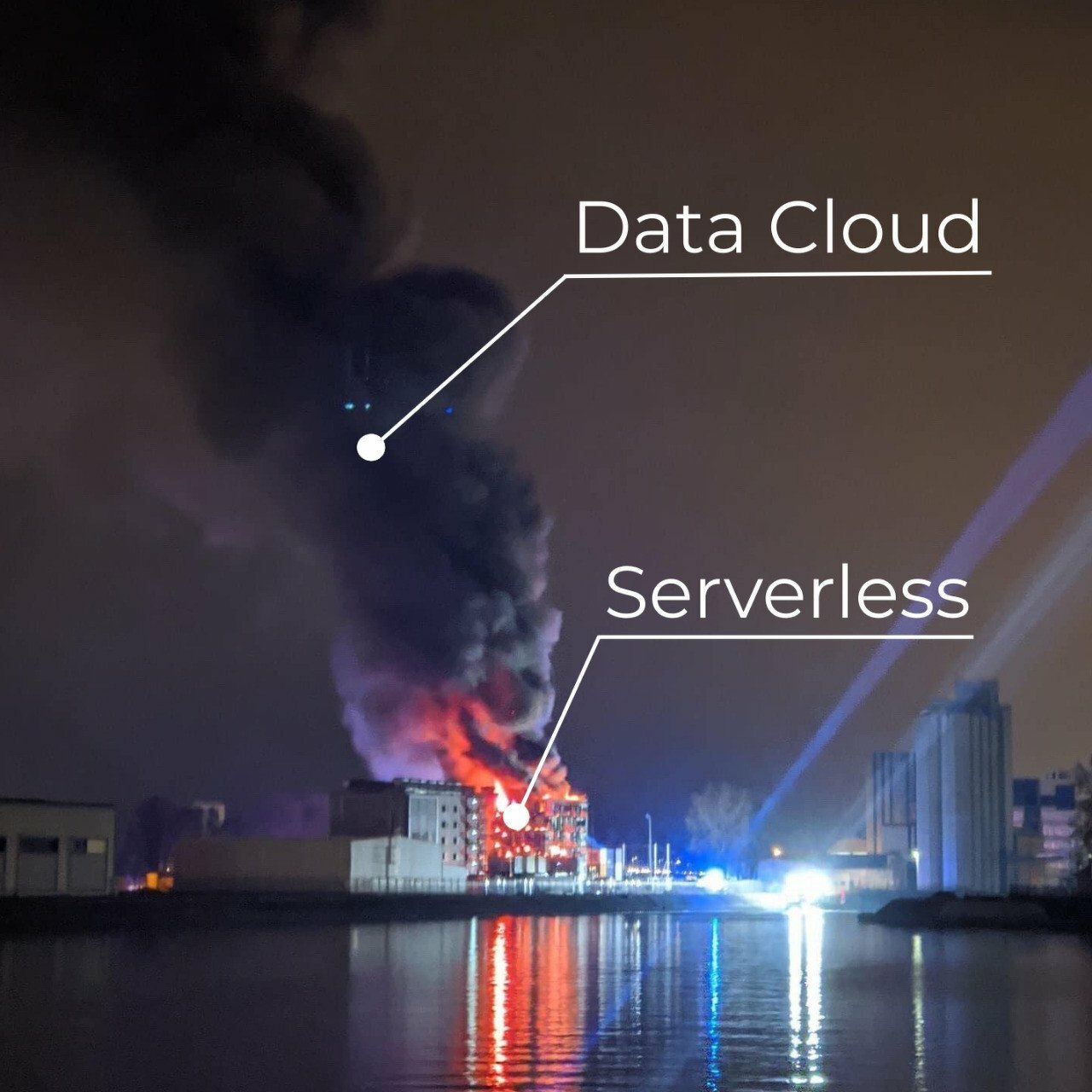
Climate stress Is just the spark
Let’s kick off with some basics. Let’s start with drought, with heatwaves, with fire. Throw in energy volatility. Add generous portions of inflation and a cost of living crisis. Climate stress increases scarcity. Scarcity sharpens questions nobody wants to answer: Who gets water? Who gets power? Who absorbs the externalities? Who profits? You can already hear how that call-in show on the AM dial sounds, the one that you listen to on long road trips in areas where the radio doesn’t pick up anything else. When you’re not listening to podcasts.
Drop some hyperscaler’s data centre into that equation — a facility that consumes millions of gallons of water and enormous amounts of electricity — and you’ve just turned background tension into a visible symbol. Data centres are quiet, windowless, secretive. They hum. They don’t explain themselves. They don’t look like hospitals or schools. They look like extraction. That makes them narratively perfect.
Scarcity becomes the story
Once scarcity becomes visible, it becomes political. Water restrictions hit households and farmers. Energy prices spike. Meanwhile, a massive AI facility continues operating behind fences. It doesn’t matter whether the water accounting is technically defensible. In conditions of stress, perception outruns spreadsheets. That’s when mobilisation begins.
Environmental grievance. Anti-capitalist anger. Anti-technology backlash. Sovereignty disputes. Indigenous land rights conflicts. “AI colonisation.” “Water theft.” “Corporate takeover.” Some of these grievances are legitimate. Some are opportunistic. Some are engineered. Extremist ecosystems don’t care about the distinction. They care about narrative density. And nothing generates narrative density like visible scarcity plus opaque infrastructure. There are still things to smash even when the building has no windows.
The narrative battlefield
Here’s the part policymakers underestimate: data centres are easy to mythologise. They are technically complex but visually simple. That makes them ideal vessels for conspiracy and accelerationist framing. There was a whole movie about it.
Eco-fascists can weaponise water scarcity. Anti-technology movements can cast AI as civilisational decay. Far-right groups can fold local grievance into broader anti-globalist rhetoric. Disinformation actors can seed stories about contamination, secret surveillance, or “elite water pipelines.” The more technical the infrastructure, the easier it is to distort.
Mobilisation rarely begins with sabotage. It begins with a story. That story becomes outrage. Outrage fuels targeting.
Targeting prefaces sabotage
This is the stage most security planning ignores. When mobilisation escalates, it doesn’t jump straight to cutting cables. It starts with people. Local officials negotiating permits. Tribal leaders weighing partnerships. Journalists reporting on water allocations. Employees working inside the facility. Doxing. Harassment. Phishing disguised as activism. Insider recruitment framed as moral resistance. Coordinated smear campaigns. Manufactured leaks.
Eventually there is a memo. Facility hardening increases. Guards get hired. Perimeter fencing improves while legitimacy erodes. And once legitimacy erodes, insider risk grows. Cyber risk grows. Physical risk grows. Because the escalation pathway isn’t linear. It’s cumulative.
Compound risk is the replenishing loop
Remember the happy replenishing loop we already dismissed? Here’s where the cyclical system lives. It’s not happy. Climate stress increases scarcity. Scarcity increases grievance. Grievance gets captured and amplified. Narrative warfare increases hostility. Hostility increases targeting. Targeting increases cyber, insider, and physical risk. Then a disruption happens — a ransomware attack during a heatwave, a shutdown during drought restrictions, a clash at a protest — and the disruption itself becomes proof of the grievance narrative. The loop tightens.
Indian Country as a flashpoint
The Smithsonian’s National Museum of the American Indian has one of my favourite restaurants in Washington, DC. That’s not the only reason to visit. It also has the definitive exhibit detailing every treaty between the U.S. and Native American tribes, including all the broken ones. There are a lot of broken ones. The Trump regime is reviving that tradition. Columbia Basin Salmon Agreement canceled. Tribal Food Grants canceled. Climate and Green Energy Funding, cut. He once tried to revoke the reservation status of the Mashpee Wampanoag Tribe. Meanwhile, the federal government dangles shiny new treaty offers. The federal government now wants tribes to make deals to develop crops of data centres. That means leasing land or selling power. It means diverting water. The US Department of Energy apparently has a whole webinar about it. This is one particular rabbit hole I’ve stayed in for a while. In parts of the American West, the future of AI is being routed through Tribal lands. It’s already planned. The asking comes as an afterthought.
Federal agencies frame data centres as economic opportunity. Partnerships promise revenue, energy sales, infrastructure investment. But in water-stressed states with contested sovereignty histories, the stakes hit different. Land and water are not just commodities. They are treaty rights. They are cultural survival. That means disputes over AI infrastructure are never just about cooling systems. They are about sovereignty, extraction history, and trust. External actors, the extremist groups, disinformation networks, political opportunists — the various grievance entrepreneurs — will not ignore that. They will exploit it.
As I click through various news and papers on federal government promises and Tech hyperscaler plans already in progress I just think back to the Dakota Access pipeline protests at Standing Rock. This rabbit hole goes back even further. It goes back centuries. But I digress. Kind of.
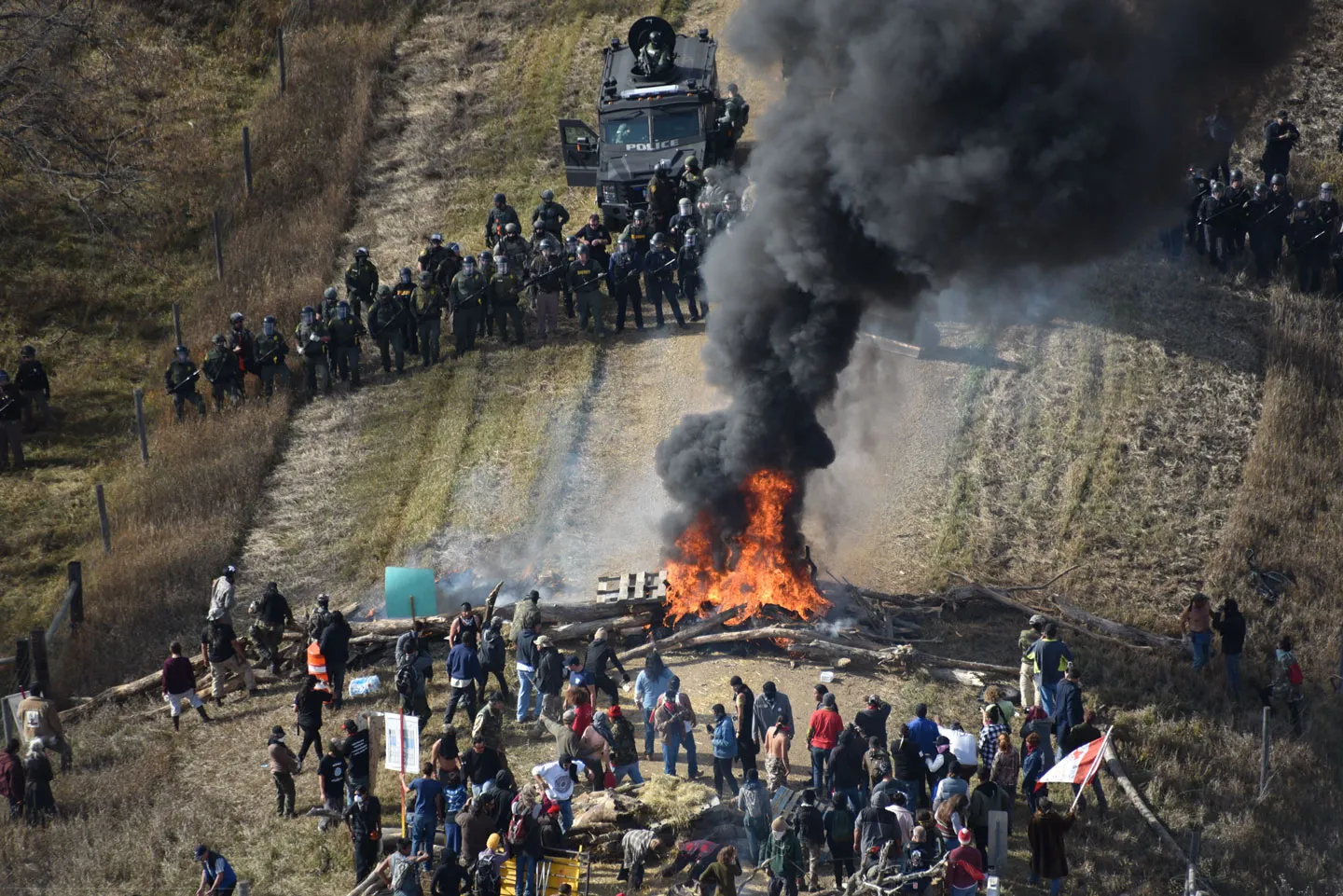
The Illusion of technical neutrality
The industry still talks as if AI infrastructure is apolitical. It isn’t. It never is. It is being built in regions already strained by drought and inequality. It draws heavily on shared resources. It often operates with limited transparency. It depends on stable grids in an era of instability. And it is emerging at the same moment as mass distrust in institutions. The very software that requires these vast fields of data centres is built to fabricate. It’s built to lie. Another feedback loop in a volatile mix of them.
The blind spot
Most resilience planning focuses on the facility: redundancy, cyber controls, perimeter security, OT segmentation. But the escalation usually starts with legitimacy failure. If communities believe water is being diverted unfairly, if leaders feel pressured or silenced, if activists are harassed or co-opted, the social environment around the infrastructure becomes hostile. In hostile environments, security costs rise. Insider risk increases. Attack surfaces widen. Infrastructure does not exist outside politics. It sits inside grievance.
Here it is
My point — and I do have one — is that dropping AI infrastructure into the middle of fragile systems isn’t just an environmental issue. It’s a conflict multiplier. Climate volatility raises scarcity. Scarcity raises grievance. Grievance fuels narrative capture. Narrative capture increases targeting. Targeting destabilises both people and infrastructure.
And when instability sets in, everyone will claim they’re surprised. They shouldn’t be. This cloud doesn’t rain. It sucks the water out and doesn’t give it back. And water is running out.
Links and such
I caught the latest episode of the ‘This Is Not A Drill’ podcast at the weekend, in which its host Gavin Esler interviewed Alex Hern, the AI writer at The Economist. It was like they were eavesdropping on my internal monologue. Give it a listen.
Informing parts of this post (not exhaustive)
- Dakota Access Pipeline: What’s at stake? (CNN) Remember this?
- What to know about the National Museum of the American Indian amid Trump’s Smithsonian review (USAToday)
- As Trump cancels Columbia River deal, promises to Indigenous American tribes are still being broken (Idaho Capital Sun)
- The local and global environmental footprint of the AI-driven boom in data centers (London School of Economics and Political Science)
- Tribal Digital Sovereignty: How Native Communities Are Powering Their Own Tech Future (Ford Foundation) This isn’t about AI or data centres directly. It’s about technology sovereignty, which none the less relates here, and more and more, everywhere.
- The AI boom is heralding a new gold rush in the American west (The Guardian)
- The Future of AI Runs Through Indian Country (The Payne Institute for Public Policy)
- Data Centers: Exploring the Opportunity for Tribes (The US Department of Energy)
- Proposed Data Centers in Indian Country This is Honor the Earth’s tracking website for “hyperscale data centers on/near Indigenous lands.”
- The No Data Centers on Native Land Campaign An Indigenous women led organisation.
- Decolonizing AI Data Centers: A Critique Through the Native Feminist Lens (UCLA’s Queered Science and Technology Center) This one’s all about the power dynamics.